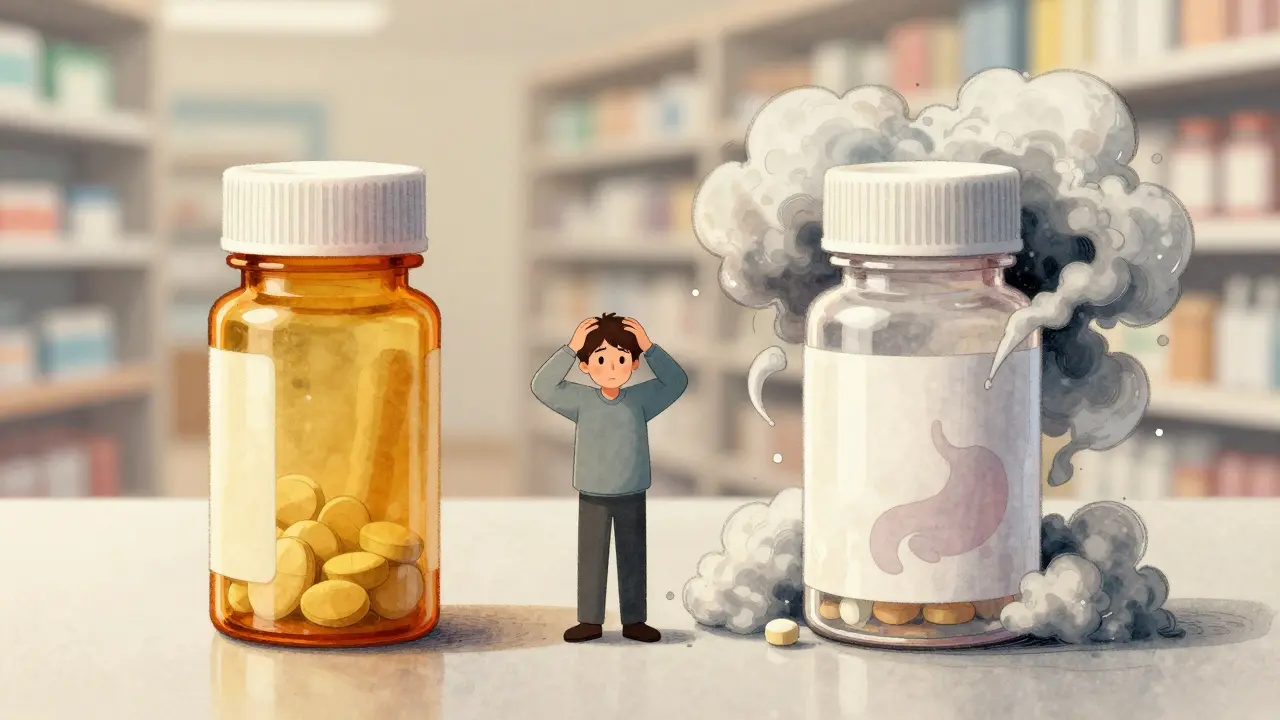
Switching from a brand-name drug to its generic counterpart is supposed to be seamless. The active ingredient is the same, the dosage is identical, and your wallet stays happier. Yet, for millions of patients, this switch brings more than just savings-it brings unexpected headaches, stomach issues, or even dangerous fluctuations in their condition. If you’ve ever felt worse after changing manufacturers, you aren’t imagining it, and you certainly aren’t alone.
The reality is that while generic medications are rigorously tested for bioequivalence, they are not carbon copies of brand-name drugs. Differences in inactive ingredients, manufacturing processes, and formulation can trigger real physical reactions. Understanding why these discrepancies happen-and knowing exactly when to call your doctor-can mean the difference between managing a minor annoyance and preventing a medical emergency.
Why Generics Aren't Always Identical to Brand-Name Drugs
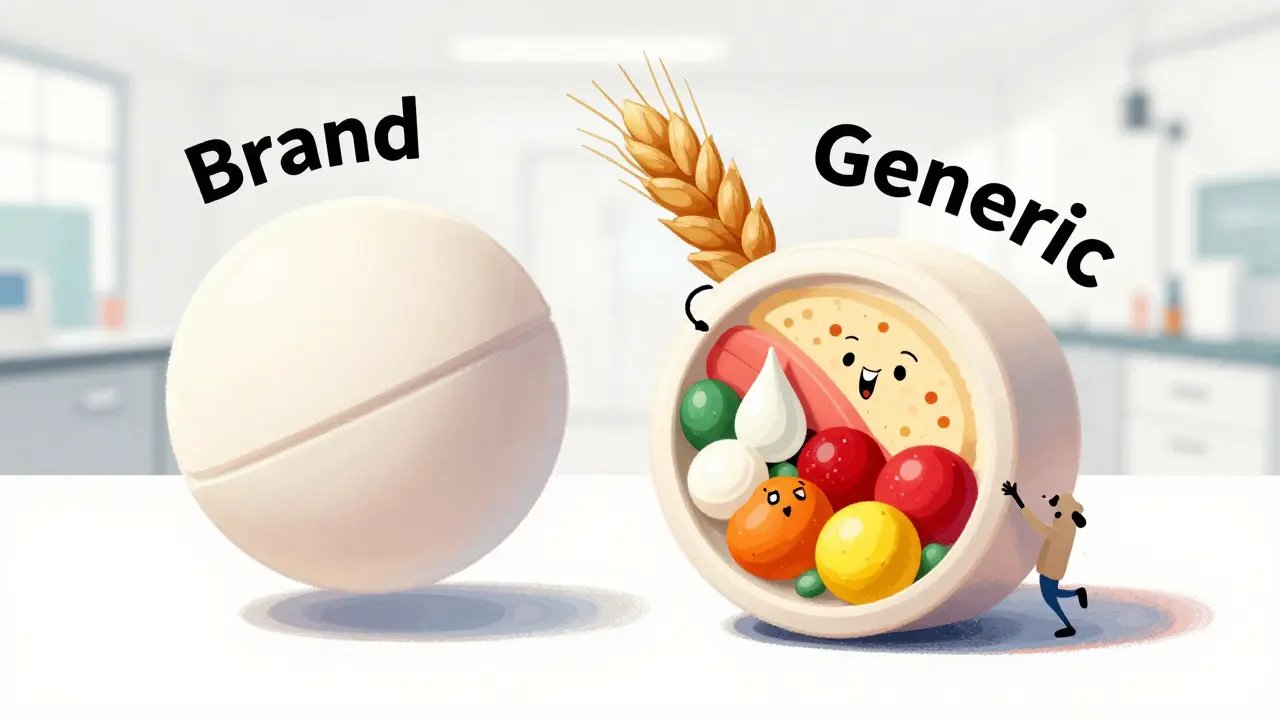
To understand side effects, you first need to look under the hood of the pill. Generic drugs must contain the same active pharmaceutical ingredient (API) as the brand-name version. However, the rest of the pill-the inactive ingredients, known as excipients-can vary significantly between manufacturers.
Excipients include fillers, binders, coatings, dyes, and preservatives. While generally safe, these components can cause problems for sensitive individuals. For example, some generic formulations use gluten or lactose as fillers, which can trigger digestive flare-ups in patients with celiac disease or lactose intolerance. Others may contain artificial dyes like Red 40 or Yellow 5, which have been linked to headaches, rashes, or hyperactivity, particularly in children’s medications.
| Excipient Type | Potential Issue | At-Risk Group |
|---|---|---|
| Gluten/Lactose Fillers | Digestive distress, bloating | Celiac disease, Lactose intolerant |
| Artificial Dyes (Red 40, Yellow 5) | Headaches, rashes, hyperactivity | Sensitive individuals, Children |
| Benzalkonium Chloride (Preservative) | Eye irritation, redness | Ophthalmic solution users |
| Flavorings (Peppermint, Saccharin) | Gut irritation, allergic reactions | Sensitive digestive systems |
A clear example involves eye drops. Branded travoprost ophthalmic solutions often use a specific preservative called SofZia, whereas many generic versions use benzalkonium chloride (BAK). Patients sensitive to BAK report significant stinging and irritation when switching to the generic, even though the active drug is identical. This highlights how formulation differences, not just the active drug, drive patient experiences.
The High-Stakes Category: Narrow Therapeutic Index Drugs
Not all medications carry the same risk when switched. The highest danger lies with Narrow Therapeutic Index Drugs (NTIDs). These are medications where a tiny change in blood concentration can lead to treatment failure or severe toxicity. The FDA identifies 18 such drugs, including warfarin (blood thinner), levothyroxine (thyroid hormone), and phenytoin (anti-seizure).
For NTIDs, the margin for error is razor-thin. A study published in JAMA Internal Medicine found that 14.7% of patients taking generic warfarin experienced unexpected bleeding events after switching manufacturers, compared to only 4.2% on consistent brand-name Coumadin. Similarly, thyroid patients often report heart palpitations and anxiety within days of switching from brand-name Synthroid to generic levothyroxine due to slight variations in absorption rates.
If you take any of the following NTIDs, you should be extra vigilant:
- Warfarin (Coumadin)
- Levothyroxine (Synthroid)
- Phenytoin (Dilantin)
- Cyclosporine
- Lithium
For these drugs, consistency is key. Many doctors recommend sticking with one manufacturer whenever possible to avoid fluctuations in efficacy and side effects.
Manufacturing Quality and Global Supply Chains
Where a generic drug is made matters. Approximately 73% of active pharmaceutical ingredients for generics are manufactured outside the United States, primarily in India and China. While global standards exist, enforcement varies. The U.S. Food and Drug Administration (FDA) requires Good Manufacturing Practices (GMPs), but inspection delays at foreign facilities remain a concern.
A stark reminder of manufacturing risks occurred during the 2018-2019 valsartan recall. Millions of patients across 22 countries were affected by contamination with N-nitrosodimethylamine (NDMA), a probable human carcinogen. This incident underscored that quality control issues can introduce serious health risks unrelated to the drug's intended mechanism. Always check for recalls and stay informed about your medication's source if you have concerns.
When to Seek Immediate Medical Help
Most side effects from generic switches are mild and temporary. However, some symptoms signal a serious adverse reaction that requires urgent attention. Do not wait to see if it passes if you experience any of the following:
- Severe Skin Reactions: Look out for Stevens-Johnson Syndrome (SJS), characterized by painful rash, blisters, and mucous membrane involvement. This is a life-threatening emergency associated with drugs like lamotrigine and allopurinol.
- Unexplained Bleeding or Bruising: Especially critical for patients on blood thinners like warfarin.
- Priapism: A painful erection lasting more than 4 hours, associated with medications like trazodone and bupropion.
- Significant Vital Sign Changes: Blood pressure or heart rate changes exceeding 15% from your baseline.
- Neurological Symptoms: New seizures, severe confusion, or intense dizziness.
The FDA defines serious side effects as those resulting in death, life-threatening conditions, hospitalization, disability, or birth defects. If any of these occur, seek emergency care immediately.

Practical Steps for Managing Generic Switches
If you suspect a generic medication is causing issues, don't just stop taking it abruptly, as this can cause withdrawal or rebound effects. Instead, follow these steps:
- Track Your Symptoms: Note when symptoms started relative to the medication switch. Most new side effects appear within 1-2 weeks.
- Check the Manufacturer: Ask your pharmacist who manufactures your current generic. Keeping track of lot numbers and manufacturers helps identify patterns if issues arise.
- Contact Your Provider Within 24 Hours: For persistent gastrointestinal distress lasting more than 48 hours, or any new neurological symptoms, call your doctor promptly.
- Request a Brand or Different Generic: In some cases, insurance plans allow for "dispense as written" requests for brand-name drugs if medically necessary. Alternatively, ask if another generic manufacturer is available.
- Report Adverse Events: Submit reports to the FDA via MedWatch. This data helps regulators identify widespread issues with specific batches or manufacturers.
Dr. Robert H. Shmerling from Harvard Health Publishing notes that anticipation can sometimes amplify perceived side effects, but he emphasizes that serious reactions must never be ignored. The burden is on both the physician and the patient to ensure the generic drug is truly safe and effective for the individual.
Regulatory Landscape and Future Safety Measures
The regulatory environment is evolving to address these concerns. The FDA’s 2024 draft guidance on complex generic products aims to tighten standards for inhalers, topical products, and modified-release formulations. Additionally, the creation of a new Therapeutic Equivalence Advisory Committee focuses on evaluating drugs with historically high side effect variation rates, starting with anti-epileptics and thyroid medications.
In the United States, bipartisan legislation known as the Generic Drug Safety Act (introduced in 2024) seeks to require manufacturers to disclose all excipient changes to prescribers and pharmacists. This transparency could empower patients and providers to make better-informed decisions before a switch occurs.
Until then, proactive monitoring is your best defense. By understanding the nuances of generic medications and recognizing warning signs early, you can maintain your health without compromising on safety or cost.
Are generic medications less effective than brand-name drugs?
Generally, no. Generic drugs are required by the FDA to demonstrate bioequivalence, meaning they deliver the same amount of active ingredient into your bloodstream within a similar timeframe as the brand-name drug. However, for Narrow Therapeutic Index Drugs (NTIDs), small variations can lead to noticeable differences in effectiveness or side effects for some patients.
Why do I feel different after switching to a generic?
You may be reacting to inactive ingredients (excipients) such as fillers, dyes, or preservatives that differ between manufacturers. Additionally, slight variations in how quickly the pill dissolves or is absorbed can affect how you feel, especially with sensitive medications like thyroid or seizure drugs.
Should I ask my doctor to keep me on the brand-name drug?
If you experience significant side effects or reduced efficacy with multiple generic versions, yes. Doctors can write prescriptions with "Dispense as Written" (DAW) codes, though insurance coverage may vary. It is essential to discuss the medical necessity with your provider to navigate potential costs.
What are Narrow Therapeutic Index Drugs (NTIDs)?
NTIDs are medications where a small change in blood concentration can cause serious harm or treatment failure. Examples include warfarin, levothyroxine, and phenytoin. Patients on these drugs should be particularly cautious when switching between brand and generic versions or between different generic manufacturers.
How can I report a bad reaction to a generic medication?
You can report adverse events to the FDA through the MedWatch program. Include details such as the medication name, manufacturer, lot number, and a description of the side effects. This data helps regulators identify safety trends and potential manufacturing issues.
Stephanie Francis
June 1, 2026 AT 02:04I have been fighting with my insurance for months to stay on the brand name levothyroxine because every time they switch me to a generic I feel like garbage. My TSH levels swing wildly and I get these terrible heart palpitations that keep me up at night. It is absolutely infuriating that they claim bioequivalence when my body clearly disagrees with their data. The excipients are not just fillers they are active irritants for people with sensitive systems. I wish more doctors would listen to us instead of dismissing our experiences as placebo effects. We need better regulations that allow patients to choose their manufacturer without jumping through hoops. This article validates everything I have been saying to my endocrinologist who refuses to write DAW codes. :/
Aswin Narayan J
June 1, 2026 AT 16:28As someone from India where generics are the norm this is interesting but also concerning. We rely heavily on imports here and quality control can be spotty at best. I have seen friends suffer from digestive issues after switching brands of common antibiotics. The mention of NDMA contamination in valsartan is a stark reminder that cost cutting has real human costs. People should definitely check the source of their meds if possible.
Jennifer Legore
June 3, 2026 AT 13:21This is such an important topic that needs more visibility! :) I am so glad you wrote this because so many people think they are imagining things when they feel worse on generics. It is crucial to track your symptoms and speak up to your healthcare provider. You deserve to feel your best and sometimes that means advocating for the specific formulation that works for you. Keep spreading awareness about these hidden differences in medications!
Alyssa Zucker
June 4, 2026 AT 14:07I never realized how much the inactive ingredients mattered until I started having migraines after switching my blood pressure medication. It was subtle at first but then it became undeniable. I feel like patients are often left out of the conversation about which manufacturer provides their pills. It makes me anxious thinking about what else might be different in the formulations we take daily.
Francis Saul
June 5, 2026 AT 22:39hey guys i think its really good to know about the narrow therapeutic index drugs. i had no idea warfarin was so tricky. thanks for sharing this info it helps a lot. maybe we should all ask our pharmacists who makes our pills next time we go. simple stuff but could save some headaches lol
Dave Villeneue
June 6, 2026 AT 01:42The FDA's definition of bioequivalence is fundamentally flawed for complex formulations. Statistical averages do not account for individual metabolic variances. Patients on NTIDs are essentially guinea pigs for cost-saving measures by insurers. The data presented regarding warfarin bleeding events is damning evidence of systemic negligence. Demand stricter manufacturing standards or accept the consequences of substandard care.
Rachel Harrypersad
June 7, 2026 AT 17:29we are all just playing russian roulette with our health really. why do we trust corporations to care about us when profit is the only metric that matters. the silence from regulators is deafening. i feel tired just reading about it. nothing changes ever.
Brian Irwin
June 8, 2026 AT 03:21i totally agree with the point about tracking symptoms. it took me weeks to figure out that my new generic antidepressant was making me nauseous because i kept blaming my diet. once i logged everything it became obvious. talking to my doctor helped too he switched me back to the old one. dont be afraid to advocate for yourself
Rosy Centire
June 9, 2026 AT 04:10It is imperative that patients understand the distinction between bioequivalence and therapeutic equivalence. The current regulatory framework fails to protect vulnerable populations adequately. Excipient variability is not a trivial matter; it is a clinical concern that demands rigorous oversight. Physicians must be educated on these nuances to provide optimal care. The proposed Generic Drug Safety Act is a step in the right direction but insufficient in its current form. We require mandatory disclosure of all formulation changes to prescribers immediately.