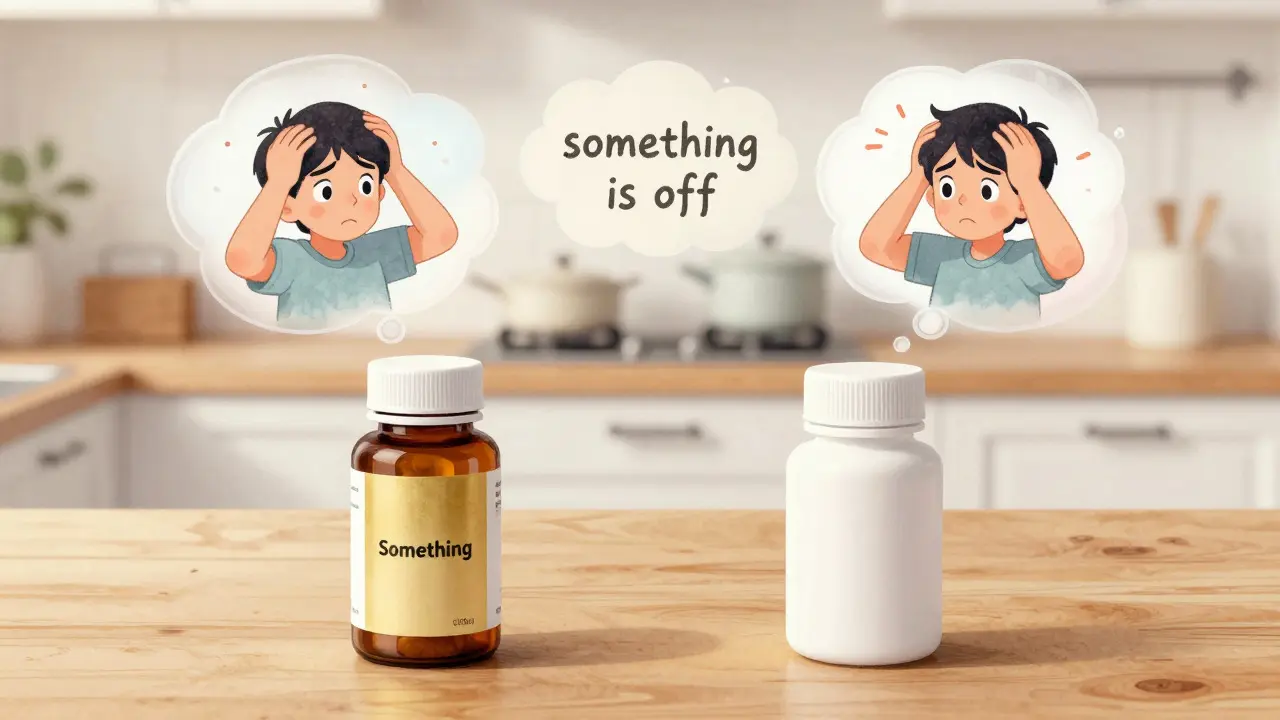
Have you ever switched from a brand-name medication to its generic version and felt like something was off? Maybe your energy levels dropped, your anxiety spiked, or your blood pressure readings became erratic. You aren't imagining it, nor are you alone. While generic drugs are designed to be identical to their brand-name counterparts in terms of the active ingredient, many patients report distinct differences in how they feel after making the switch. This isn't just placebo effect; it’s a complex interplay of chemistry, biology, and regulatory standards.
The short answer is that while generics must meet strict federal standards for safety and efficacy, they are not carbon copies of brand-name drugs. Differences in inactive ingredients, manufacturing processes, and individual body chemistry can lead to varied responses. For most people, these differences are negligible. But for others-especially those taking sensitive medications-they can be clinically significant. Understanding why this happens empowers you to manage your health more effectively and communicate better with your healthcare providers.
What Is Bioequivalence?
To understand why reactions vary, we first need to look at Bioequivalence, which is the measure of the rate and extent to which the active ingredient becomes available at the site of drug action. When the Food and Drug Administration (FDA) approves a generic drug, it doesn't require the manufacturer to repeat the massive, expensive clinical trials that the brand-name company conducted. Instead, the manufacturer must prove that the generic delivers the same amount of active ingredient into the bloodstream over the same period as the brand-name drug.
The FDA allows a specific margin of error for this comparison. The generic drug must deliver between 80% and 125% of the active ingredient concentration found in the brand-name version, within a 90% confidence interval. On paper, this seems tight. In practice, however, it means two different generic versions of the same drug can differ from each other by up to 45% in absorption characteristics while still being legally approved. If one generic is at the low end of the scale (80%) and another is at the high end (125%), the gap between them is substantial. For most medications, your body handles this variance without issue. But for some, that gap matters.
The Role of Inactive Ingredients
If the active ingredient is the engine of the car, the inactive ingredients are the chassis, paint, and interior. They don’t drive the car, but they affect how it runs and feels. Generic manufacturers are allowed to use different fillers, binders, dyes, preservatives, and coating materials. These excipients can make up 80% to 99% of a pill’s total weight.
For many patients, these differences are irrelevant. But for others, they cause real problems. Some people have allergies or sensitivities to specific dyes or preservatives. For example, bisulfites used as preservatives can trigger asthmatic reactions in 5-10% of asthma patients. Others may experience digestive issues if a generic uses a different binder that dissolves differently in the stomach. Even the color of the pill can influence perception, leading to nocebo effects where patients expect worse results and therefore feel them.
| Feature | Brand-Name Drug | Generic Drug |
|---|---|---|
| Active Ingredient | Identical | Identical |
| Inactive Ingredients | Proprietary formulation | May vary significantly |
| Bioavailability Range | Baseline (100%) | 80% - 125% of brand |
| Cost | High (covers R&D) | Low (80-85% cheaper) |
| Regulatory Approval | Full clinical trials | Bioequivalence studies only |
Narrow Therapeutic Index Drugs: Where Precision Matters
The biggest risks arise with medications known as Narrow Therapeutic Index (NTI) drugs. These are medications where the difference between a helpful dose and a toxic dose is very small. Think of it like walking a tightrope: a slight step left or right doesn't matter much on a wide path, but on a thin wire, a tiny movement can send you falling. NTI drugs include levothyroxine (for thyroid conditions), warfarin (a blood thinner), phenytoin (for seizures), carbamazepine, and digoxin.
For these drugs, even small fluctuations in blood concentration can lead to serious health issues. A study published in JAMA Internal Medicine analyzed over 2,000 patients switching from brand-name levothyroxine to generic versions. It found that 23.7% experienced thyroid-stimulating hormone (TSH) levels that drifted out of the therapeutic range within six months. Compare that to 14.2% of patients who stayed on the brand name. That’s a significant jump in instability.
Similarly, research on antiepileptic drugs showed that 17.3% of patients experienced breakthrough seizures after switching from brand-name lamotrigine to generics, compared to just 8.9% who remained on the brand. These numbers highlight why consistency is critical for NTI medications. Your body relies on steady, predictable levels of these drugs to function safely.

Individual Biology and Pharmacogenomics
Beyond the drug itself, your unique biology plays a huge role. Everyone metabolizes medications differently based on genetics, liver function, gut health, and even diet. This field, known as pharmacogenomics, studies how genes affect a person's response to drugs. Recent research suggests that genetic testing can predict individual responses to generic medications with over 80% accuracy for certain drug classes.
If you have a slower metabolism, a generic drug that absorbs slightly faster might spike too high in your system, causing side effects. If you metabolize quickly, a generic that absorbs slower might never reach effective levels, leaving you untreated. Age also matters. Older adults often have reduced kidney or liver function, making them more sensitive to variations in drug absorption. Children, whose bodies are still developing, can also react unpredictably to changes in formulation.
Real-World Patient Experiences
Data from patient reviews and surveys paints a clear picture of individual variation. An analysis of over 1,200 patient reviews on Drugs.com found that nearly 40% of patients taking generic levothyroxine reported worse symptom control compared to the brand name. Common complaints included increased fatigue and mood swings. On social media platforms like Reddit, discussions about generic bupropion (Wellbutrin) revealed that over 60% of users reporting issues cited severe headaches or increased anxiety after switching manufacturers.
Pharmacists see this firsthand. A survey by the National Community Pharmacists Association found that nearly 70% of community pharmacists had observed patients experiencing adverse effects when switching between different generic manufacturers of the same medication. For almost half of them, this happened frequently-more than five cases per month. These aren't isolated incidents; they are a pattern recognized by healthcare professionals on the front lines.

How to Manage Switches Safely
If you’re concerned about switching to a generic, you’re not powerless. Here are practical steps to ensure your safety and efficacy:
- Know Your Meds: Identify if you take any Narrow Therapeutic Index drugs. If so, ask your doctor about maintaining a consistent brand or manufacturer.
- Monitor Closely: After any switch, keep a medication diary. Track symptoms, side effects, and vital signs (like blood pressure or heart rate). For thyroid patients, check TSH levels 6-8 weeks after a change. For blood thinners, monitor INR within 3-5 days.
- Check Inactive Ingredients: If you have known allergies, ask your pharmacist for the FDA’s Inactive Ingredient Database to verify what’s in your new pill.
- Stick to One Manufacturer: If a specific generic works well for you, ask your pharmacy to try to stock that specific manufacturer. Consistency reduces variability.
- Communicate Openly: Tell your doctor if you feel different. Don’t assume it’s “just in your head.” Data supports your experience.
The Regulatory Landscape and Future Outlook
Regulators are aware of these concerns. The FDA has proposed stricter guidelines for NTI drugs, aiming to tighten manufacturing standards. The European Medicines Agency already requires tighter bioequivalence ranges (90-111%) for these sensitive drugs, resulting in fewer generic approvals but potentially higher consistency. In the U.S., the push is toward better post-marketing surveillance. Most generic manufacturers now conduct voluntary studies to track real-world effectiveness, a significant increase from just a few years ago.
Despite the noise, it’s important to remember that generics save the U.S. healthcare system hundreds of billions of dollars annually. They account for 90% of all prescriptions dispensed. For the vast majority of medications-like metformin for diabetes or common antibiotics-studies show no statistically significant difference in outcomes between brand and generic. The key is knowing which category your medication falls into.
Are generic drugs less effective than brand-name drugs?
For most medications, generic drugs are equally effective. They contain the same active ingredient and must meet strict bioequivalence standards. However, for Narrow Therapeutic Index (NTI) drugs, small differences in absorption can lead to noticeable changes in effectiveness or side effects for some individuals.
Can I choose which generic manufacturer my pharmacy uses?
Yes, you can request a specific manufacturer, though insurance plans may not always cover it. If you find that one generic works better for you, ask your pharmacist to note your preference in your profile to maintain consistency.
What should I do if I feel worse after switching to a generic?
Contact your doctor immediately. Do not stop taking your medication abruptly. Keep a log of your symptoms and share it with your healthcare provider. They may adjust your dose, switch you back to the brand name, or try a different generic manufacturer.
Why do generic pills look different from brand-name pills?
Generic pills often differ in color, shape, and size because they use different inactive ingredients (excipients) like dyes and binders. These differences do not affect the active ingredient but can impact how the pill dissolves or how some patients tolerate it.
Is it safe to switch between different generic brands of the same drug?
It is generally safe for most drugs, but for Narrow Therapeutic Index medications, frequent switching can cause instability in blood levels. It is best to stick with one manufacturer whenever possible to minimize variability.